

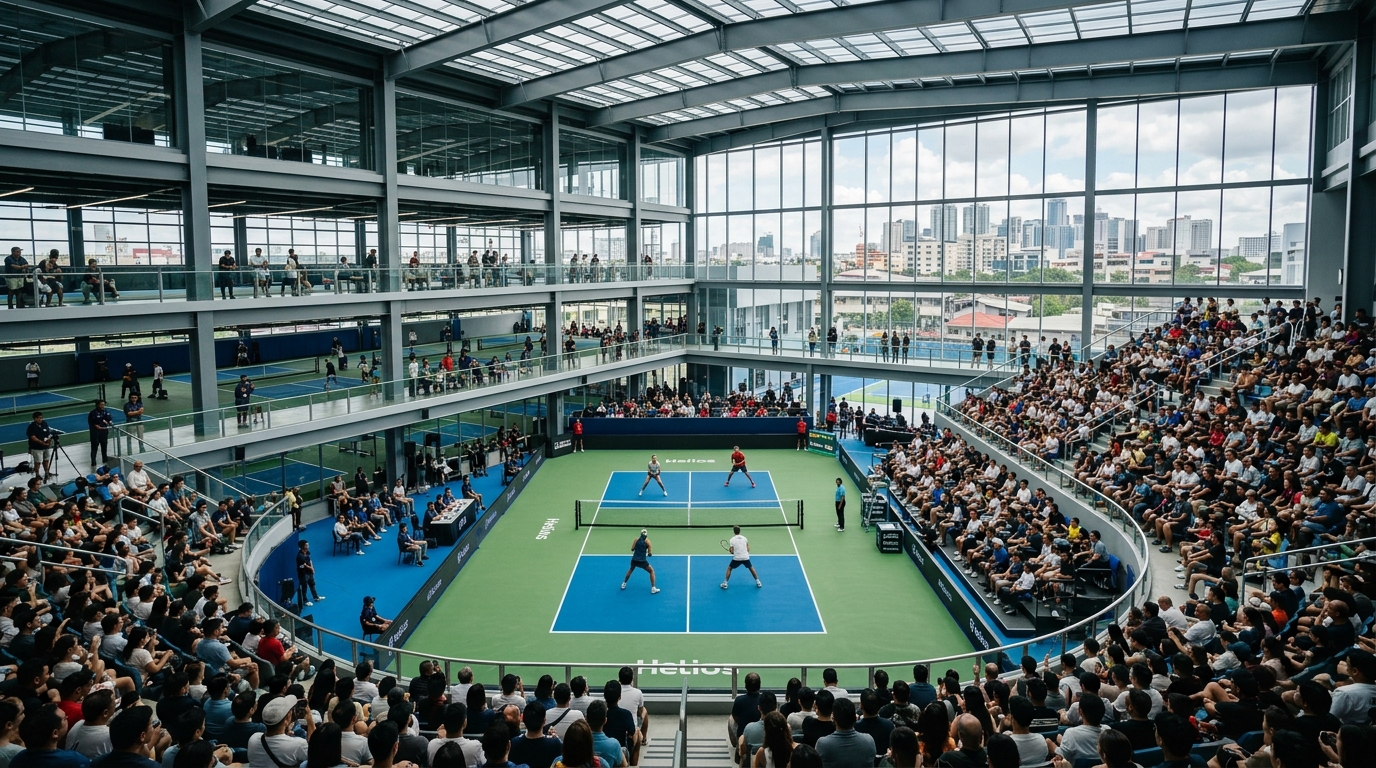
While most countries are still struggling to find enough flat pavement for a single court, the Philippines is literally building upward. Helios, currently under development in Pasig City, is set to become the architectural crown jewel of the Asian pickleball scene. This massive complex isn't just a collection of courts; it’s a dedicated high-performance center featuring a 2,000-seat stadium designed specifically for the viewing angles of a pickleball match. By moving the sport into a multi-story, climate-controlled environment, the project addresses the "tropical hurdle"—allowing elite athletes to train and compete at peak performance regardless of the intense Manila heat or the monsoon rains that traditionally disrupt the outdoor season.
This infrastructure boom is the "physical evidence" of a much larger strategic goal: the 2032 Brisbane Olympics. The Philippine Pickleball Federation (PPF) has already secured a historic milestone, making the Philippines the first country in the world where the National Olympic Committee and the IOC officially recognize pickleball as a national sports association. Facilities like Helios provide the necessary "proving ground" for the PPPR (Philippine Pickleball Participant) Registry to host international-standard qualifiers. As the sport eyes its Olympic debut, the existence of a specialized stadium in the heart of Manila positions the Philippines as the primary training hub for Southeast Asian athletes looking to secure their spot on the world’s biggest athletic stage.
Topics:
