


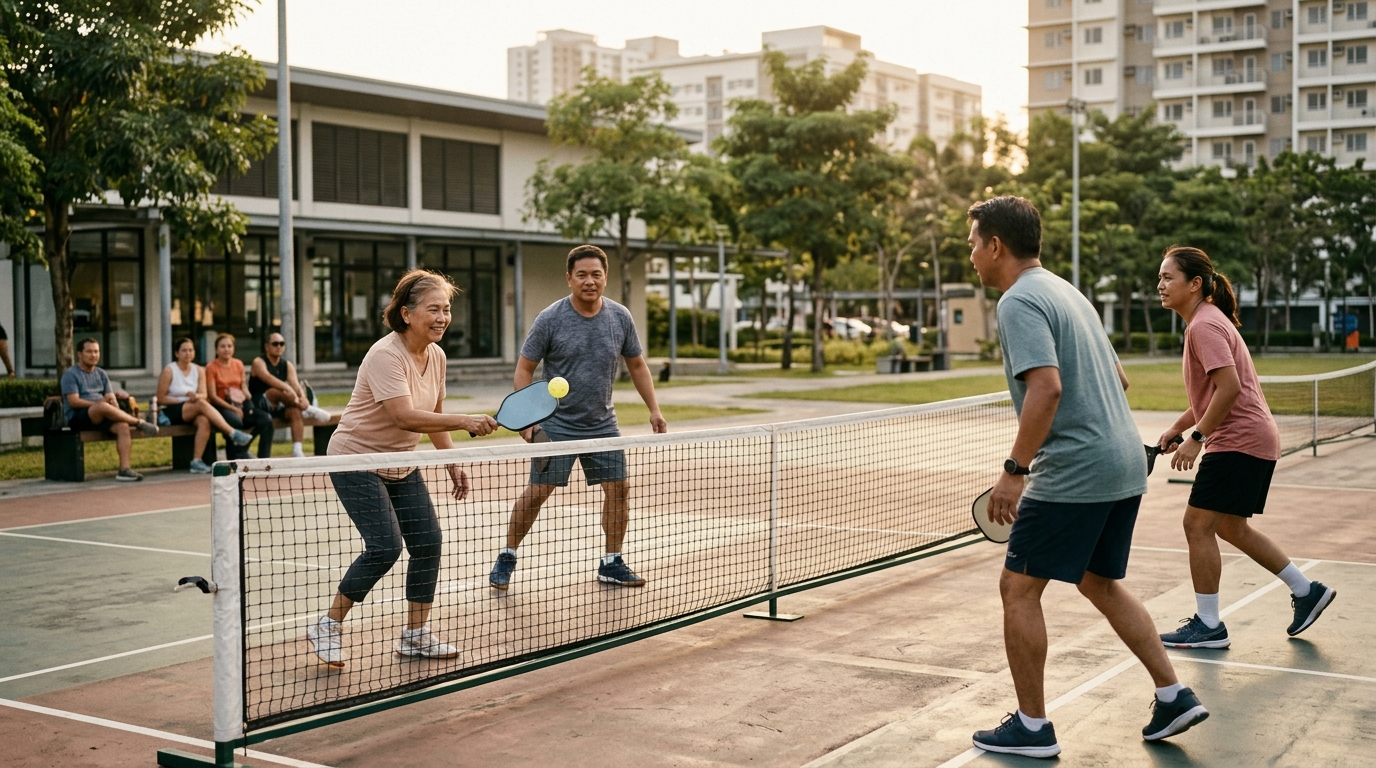
The relationship between pickleball and health has moved from anecdotal to academic in 2026. According to recent clinical findings, a typical 60–90 minute session on the court allows players to burn between 400 to 600 calories, a rate that rivals traditional gym workouts but with significantly higher levels of "perceived enjoyment." For the aging Filipino population, the sport is a vital tool for preventing osteoporosis; the weight-bearing nature of the game’s lateral movements and short bursts of speed has been shown to improve bone density and joint lubrication. Unlike high-impact sports like basketball, pickleball offers a "joint-friendly" intensity that keeps the heart rate in the moderate-to-vigorous zone (roughly 70% of play time), effectively lowering blood pressure and supporting healthy cholesterol levels across the archipelago.
Beyond the physical "pump," the mental health impact of pickleball is where the sport truly shines in the 2026 wellness landscape. Research published in late 2025 highlights a 30% reduction in cognitive decline among regular players, thanks to the constant strategic "chess-like" thinking required at the kitchen line. The "Pickleball Effect" on mood is equally potent—triggering a massive release of endorphins that combat the rising levels of urban anxiety and depression. Most importantly, the inherent social nature of the game—whether playing doubles at a local SM Active Hub or a barangay court—fosters a sense of social integration that is scientifically linked to increased life expectancy. In an era of digital isolation, pickleball has become the Philippines’ most effective "social prescription" for a healthier, happier life.
Topics: