

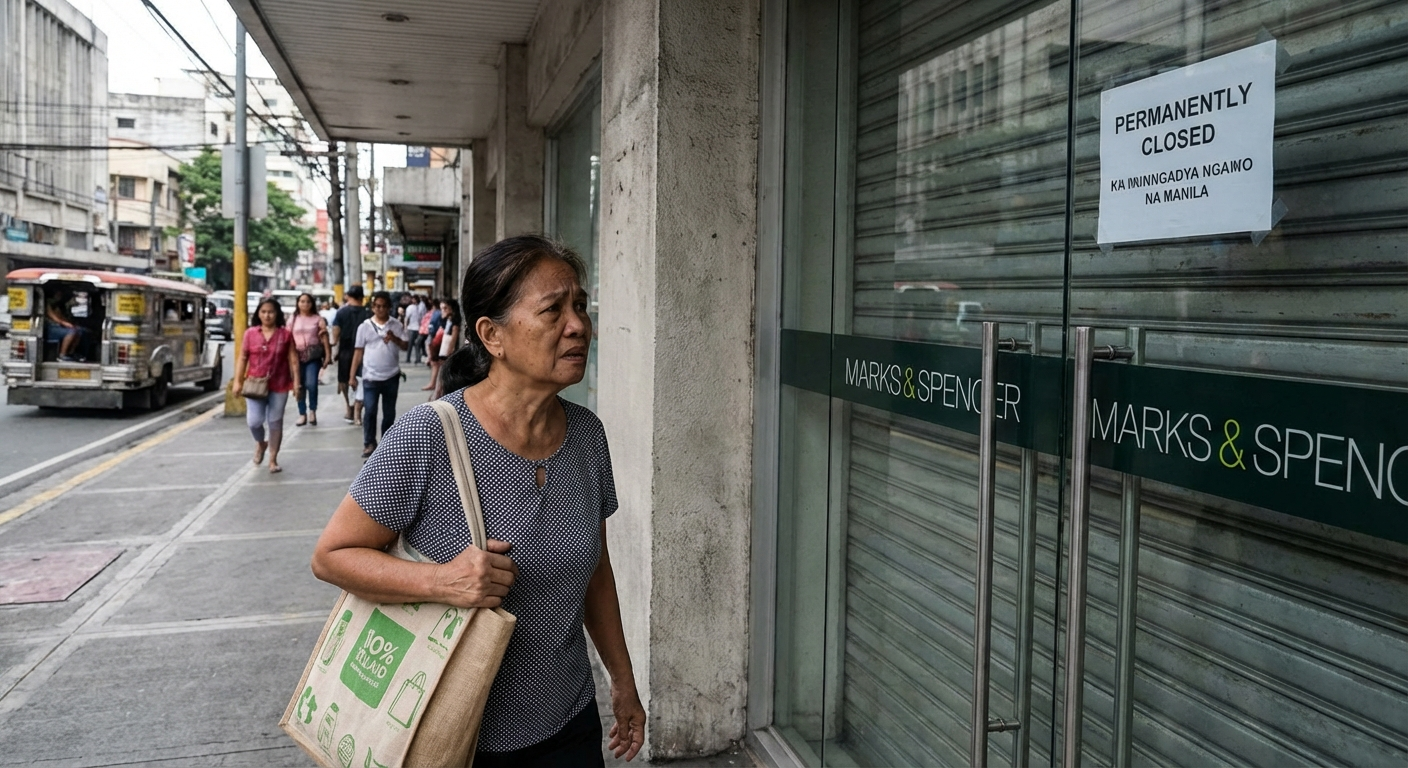
British retailer Marks & Spencer is set to close its doors in the Philippines, signaling changes within the country's retail sector. The exit raises questions about the future of international brands operating in the Philippines and the potential impact on Filipino consumers and employees. The Business Times reports that the departure is due to a shifting retail market. Specific details regarding the timeline and number of stores affected remain unclear, but the move will likely impact Filipino employees working at Marks & Spencer locations throughout the country. For families relying on the income generated from these jobs, the closure could present financial challenges. OFWs with families dependent on these jobs may also feel the impact. Why It Matters Marks & Spencer's exit highlights the evolving dynamics of the Philippine retail landscape, possibly influenced by factors such as increased competition from local brands, changing consumer preferences, and the rise of e-commerce. This trend could affect other international retailers and, subsequently, the job market for Filipinos. The ripple effect may also impact local suppliers and businesses that partnered with Marks & Spencer. What Filipinos Need to Know Filipinos, especially those employed in the retail sector, should be aware of the changing trends and potential disruptions within the industry. It's crucial to adapt skills and explore opportunities in growing sectors like e-commerce and local brands. For OFWs with families employed in the retail sector, it is important to have contingency plans and explore alternative income sources. The situation underscores the importance of continuous skills development and financial planning to navigate the uncertainties of the global market.
Topics:
